Sunday, May 2, 2021
Jackson Cosplaying a Vulture
Friday, April 30, 2021
Antagonist Defined
The dictionary defines Antagonist as a person who actively opposes or is hostile to someone or something, an adversary. Which strongly suggests a need to comprehend the protagonist to spin up the antagonist.
Plenty of people espouse the idea of the antagonist being a mirror to your protagonist. If the protagonist is sitting on the sunny side of the mirror, the antagonist lives and moves in the shadows.
It sets up the story and the conflict so that everything the protagonist must thwart and overcome to accomplish their goal is not just their antagonist, it’s also a part of themselves. This is the old Western movie where what separated the good guys from the bad guys is the thinnest of lines. At the start of the movie, you get the sense that good stiff breeze could blow the good guy over to join the black hat gang.
But let’s return to that definition of antagonist for a moment. Remember how it specifies a person? If you’re of a certain age, you may recall that your high school English classes listed five different types of conflict:
Man vs Man
Man vs Nature
Man vs Society
Man vs Supernatural
Man vs Self
Only one of those five allows for a human antagonist. So more broadly defined, antagonists are obstacles. They can be anything and anyone standing in our way. But, you know, a wall is an obstacle, but I might not call it an antagonist. Sometimes obstacles are only obstacles and they don’t rise to the level of antagonist. I feel like there’s one crucial piece of the puzzle left – change.
Unless you’re writing literary fiction, protagonists need character arcs. They must change and grow in order to finally achieve their goals. Yet who among us likes to have their flaws pointed out to them, much less likes to have to root out and excise those flaws? Most humans only change under duress – when the pain of the flaw is greater than the pain of change.
It is the antagonist’s job to apply that pain. It is the antagonist’s job to force the protagonist to take a long, hard look at themselves and choose. It’s the antagonist’s job to leave the protagonist with no choice but to change.
How do I pick the right antagonist for my stories? It will come as a surprise to no one – I start with character. Usually protagonists. When a story idea rears up from the deep, an antagonist usually lurks in the idea, already. But as I begin sketching out the proof of concept and doing all the pre-writing character work, the protagonists’ arcs, replete with wounds, faulty beliefs, and flaws takes shape. I get a sense of each protagonists’ greatest fears. The antagonist must then embody those fears and force the protags to face and to overcome them.
In that sense, the antagonist is partially a hero of the story. They are the catalyst that forces reaction from the protagonist who would go on taking the path of least resistance forever and accomplishing nothing.
It’s a big relief to read or see a story where the protagonist is bounced off all the other molecules inside a story flask. Especially when the biggest obstacle most of us face is whether to fold the laundry the minute the dryer buzzes or let it sit in there over night moldering.
Thursday, April 29, 2021
No conflict, No story
Which translates to: no antagonist = no conflict = no story. And that’s what we’re talking about this week, the antagonist’s arc!
My daughter DNFd (did not finish) a book last night. It had been a book she’d excitedly picked up having been sold on the back blurb. When I asked her why the DNF she said ‘because nothing’s happening’.
As authors, we want to avoid that kiss of death at all costs. So, how do we do it? I don’t know about you, but I can share my process!
Interestingly, to me anyway, I realized I go about crafting my antagonists two different ways depending on the genre.
Fantasy
When I write fantasy I start out with my hero and I see them at the climax of the story, the moment they are most fearful and also the moment they rip through whatever’s been holding them back. Now, I don’t always see what exactly they’re up against, but I observe the character’s emotions and what’s going on around them.
Since I have a pretty good sense of who the hero is and what's at stake for them I know that the villain has to either want the same thing, with their own twist of course, or want an antithesis to the hero's desires. With all that information I can put together the big evil that must be stopped and then figure out how my hero got to that climax point.
Science Fiction
When I write sci-fi I start out with the antagonist, the big evil that must be stopped. Once I know who, or what, my villain is I can craft the type of hero the world needs to stop it. Whoa, that kinda sounds like superhero stuff. But in a way, sci-fi—the kind that threatens the entire world—needs someone larger than life. And I love making taking a person who sees themselves as only successful in their small corner of the world and challenging them so they grow into a superhero.
It doesn’t matter what genre, we want strong antagonists. And here’s one tip I’ve picked up over the years:
Keep it Simple.
Your villain doesn’t need a master plan that requires blueprints and a powerpoint. You only need a conflict that smacks your hero in the face.
When I started writing The Mars Strain it was during the 2015 Ebola outbreak. I was running a laboratory and participating on a multi-healthcare system Emergency Preparedness Board. Every day I was thinking ahead to what we’d need and what we’d do if there was a deadly outbreak that reached across the world to us. From that real life experience I imagined a new organism, and because I write to entertain, not mimic real life, my organism came from Mars. Boom. There was my antagonist with its one goal: proliferate.
How do you create the perfect antagonist?
Maybe your hero and villain are the same, only one choice veered the antagonist off to another path. Maybe your antagonist has very little page time but you Al Pacino the Devil’s Advocate and nearly convince your hero to make the wrong climatic choice. I’d love to know!
I'm a reader, writer, blogger, musher who pens Sci-Fi as A.C. Anderson and Fantasy as Alexia Chantel. Chronic Disease can't hold me down.
Wednesday, April 28, 2021
The antagonist as the third-act specialist
When you're writing conflict-driven fiction -- which is most Western fiction, honestly -- choosing an antagonist is pretty important. The actions of the antagonist drive not only the plot but also the necessary arc and change in your protagonist. So that's what we're talking about this week on SFF Seven: picking the antagonist that's going to make things hard for your poor protagonist.
I tend to start thinking about stories by coming up with a push-pull struggle for a character or a relationship, then I populate that struggle with characters who deserve it. (All authors are cruel this way. It's what feeds us.) Somewhere within that early thinking-about-it-ness, an antagonist usually emerges sort of organically. For instance, you know that all good protagonists need to have a GMC (goal, motivation, and conflict), right? The way I keep it straight in my head is the pithy:
What does she want? (goal)
Why does she want it? (motivation)
What's keeping her from getting it? (conflict)
That third thing, the conflicty thing, is the antagonist ... presto! That's how I pick my antagonist.
Note that an antagonist does not have to be a villain. It can be, but it can also be an alien invasion, a volcano explosion, a phobia, a busybody matchmaker, or overdemanding parents who want my girl to be a doctor waaaay too much and won't pay for art school.
If you're thinking in acts, specifically a five-act structure (1. exposition, 2. rising action, 3. climax. 4. falling action or digging deep and overcoming, and 5. denouement), I've heard that Act 3 is All About the Antagonist. Which would make sense, right? Just as the protag hits the brick wall of the climax, that's the perfect time to the antagonist to whip back the curtain, announce its fiendish presence, and make things really super difficult for my girl.
But the dirty secret is that the antagonist has been there all along, cooking up obstacles from the very beginning. The third-act climax is just an opportunity to cue the mustache-twirling and bwahaha.
Okay, I'm not sure if this all answers the "how do I pick an antagonist that will complement my protagonist?" question, but it's the best I can do:
Pick the antagonist that is gonna make things as tough as possible for your longsuffering protagonist, get them working at their nefariousness early and often, and have them really bring the hammer to your excruciating but compelling climax.
Tuesday, April 27, 2021
New Sci-Fi Release: THE MARS STRAIN by A.C. Anderson
We’ve colonized Mars, but we never should’ve come back.
When the first astronauts of the Mars Colony returned to Earth, they brought a mysterious, metal box they had found half-buried in the red dirt, called the Mars Cube. The scientists assigned to uncover its secrets tested it, scanned it, tried to blow it up, and everything in between. Then they accidentally opened it.
Biosafety level-4 laboratories, BSL4, hold the most deadly viruses on the Earth, and Juliet handled them daily. Her research at the CDC landed her a position on the Mars Cube Investigative Team in the world’s only BSL-5 lab. The only drawback: Her ex was one of the astronauts that brought back the Cube.
What was held inside the Cube shouldn’t have gotten out. It shouldn’t have ever been exposed to our planet because the Mars Strain is now loose and killing at a 100 percent mortality rate. Juliet is fighting for our very existence, Jake is working with the Mars Colonists to decipher the Cube’s holographic message for a clue, and someone wants to take over the Mars Program for themselves. They’re all watching the clock, and it's about to run out.
Fantasy Author.The Immortal Spy Series & LARCOUT now available in eBook and Paperback.
Subscribe to my newsletter to be notified when I release a new book.
Monday, April 26, 2021
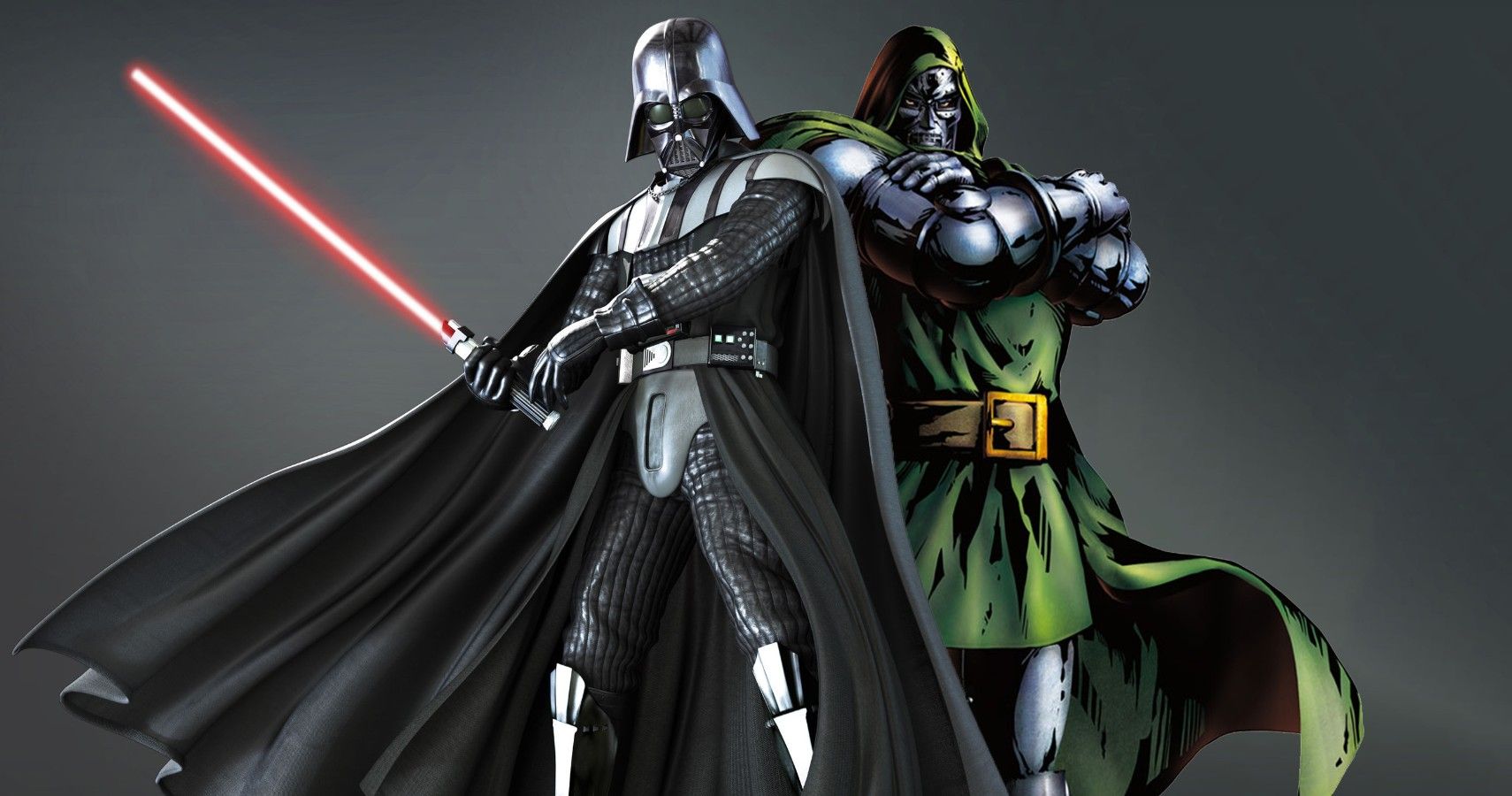
A Dark Reflection
"The Antagonist’s Arc - how do you choose one that will not only compliment your protagonist’s arc but drive it?"
I write fiction, a little of everything and a lot of horror. I've written novels, comic books, roleplaying game supplements, short stories, novellas and oodles of essays on whatever strikes my fancy. That might change depending on my mood and the publishing industry. Things are getting stranger and stranger in the wonderful world of publishing and that means I get to have fun sorting through the chaos (with all the other writer-types). I have a website. This isn't it. This is where you can likely expect me to talk about upcoming projects and occasionally expect a rant or two. Not too many rants. Those take a lot of energy. In addition to writing I work as a barista, because I still haven't decided to quit my day job. Opinions are always welcome.
Sunday, April 25, 2021
When Your Antagonist Is the Whole World
Saturday, April 24, 2021
Your Writing Personality: Blessing, Curse, or Both?
Happy Saturday, all! This week's topic on the SFF Seven Blog is how our Meyer's-Briggs assessment affects our writing, and I'm about to get real. You may not know this, but taking a close look at your personality assessment can point out behavioral issues that could be stifling your writing life. It isn't easy to face truths like this sometimes, but it can help so much when it comes to truly tackling change.
I'm an INFJ, a slightly introverted Advocate with mega intuition who listens to her silly, giant heart. Which is no surprise. Leave it me to spend most of my time cheerleading and helping others rather than focusing on my own work. I battle this constantly; it's just how I'm designed. It's the curse part of my personality.
It wasn't until a couple years ago that I began actively trying to pull the brakes on some of my extracurricular writing and editing activities and instead, turn some of that attention inward. I remember thinking--STOP TRYING TO MAKE EVERYONE ELSE SUCCESSFUL. HELP YOURSELF.
I can't say that I've done the best job at this. I'm still an editor, a job I love. Saying no to people who are Oh, so close isn't in my DNA. Literally. I have to MAKE myself send query rejections (but I can because I have to, just FYI 😉). It's built into every cell that I have to help others though, above helping myself, which is not a great trait. This behavior tendency has led to a long career of seeing other people reach dreams that I've yet to attain. I've worked with people who didn't even know what genre they were writing, and then, a few years later, watched them go on to major traditional book deals, much to my delight. I love seeing people succeed. I will never be the jealous gal in the back corner. I'll be the one screaming and cheering and beaming with pride and happiness at the foot of the stage.
But, there came a point where I realized that I'm not just an editor, mentor, critique partner, teacher, or cheerleader. I'm a writer, first and foremost. With my personality type, I've had to face more than a few hard truths. Not only the advocate issue, which is still significant, but the idealist side of me also happened to be a weakness. I sought perfection in my own writing, my standards so high I could never be good enough. I've also always had really difficult, high-concept ideas that are doubly hard to manifest under the pressure of my self-imposed impossible standards. AND, on top of that, I struggled to feel okay with starting out anywhere than the top.
And that's ridiculous. (Thankfully, I know this now.)
Another issue I faced was that until just a few years ago, I had no idea how badly I needed organization and lists to sharpen my focus and keep me on track with my writing goals. It was like I knew I needed a plan, but knowing what manner of planning would work for me? I had no clue. Thankfully, this particular battle has been won. Now, I use a KanBan board, quarterly goals, and daily lists to get things done.
It's still a struggle, though. On top of all the above, I'm a hard worker, which means I can put in some serious hours for other people, forgetting that I need to do the same for myself. Prioritizing my own work is still hard for me. I'm that person who has to clean the whole house before they can sit down to write. If I'm not careful, my writing tasks can easily fall to the bottom of my lists. This is something I'm learning to overcome with each passing day. Psychology was my minor in college. I believe in behavior modification, y'all, but it's not easy! 🤣
There are advantages to being an INFJ Advocate, too. The blessing part. For example, INFJs tend to have vivid imaginations and loads of compassion. I'm a bit of an empath as well, so I understand emotion. One of my best talents in writing is getting to the heart of the matter, digging down to the often missing emotional layer in a story. I'm insightful and able to read motivation, feelings, and needs, and my intuition about people, if I'm able to meet someone face to face especially, is often scary accurate. This helps so much when designing characters. I can figure out what makes them tick and translate that to the page.
Still, I'm a work in progress. But, the work is being done, and partly because I understand my strengths, weaknesses, and tendencies. Did I also mention that I'm abnormally persistent? I will get where I'm going, even if my journey takes a little more effort.
How about you? Have you examined your personality type and how it might be affecting your writing life? Is it more of a blessing or a curse?
Thanks for reading! Do you follow me on social media? I mostly hang out on Instagram. Find me there and say hi!
~ Charissa
CHARISSA WEAKS is an award-winning author of romantic and historical fantasy. She crafts stories with fantasy, magic, time travel, romance, and history, and the occasional apocalyptic quest. You can find Charissa on Instagram if you'd like to follow her writing journey!